OpenGL Renderer
A C++ real-time renderer exploring PBR, path tracing, procedural generation, and interactive rendering.
C++ / OpenGL / GLSL / ImGui / CMake
Problem
Most graphics knowledge stays theoretical until you build a renderer from scratch. Frameworks and engines hide the interesting parts — how light actually gets simulated, how materials are shaded, how a frame is assembled. I wanted to understand every stage of the pipeline by owning all of it.
Approach
Build a real-time engine in modern C++ with OpenGL as the rendering backend, implementing each technique from first principles rather than copying tutorial code. Every feature — lighting models, shadow mapping, PBR materials, path tracing — is written to be understood, not just to work.
Architecture
The engine is structured around a small set of core systems:
- Rendering core — shader pipeline, framebuffer management, draw-loop architecture
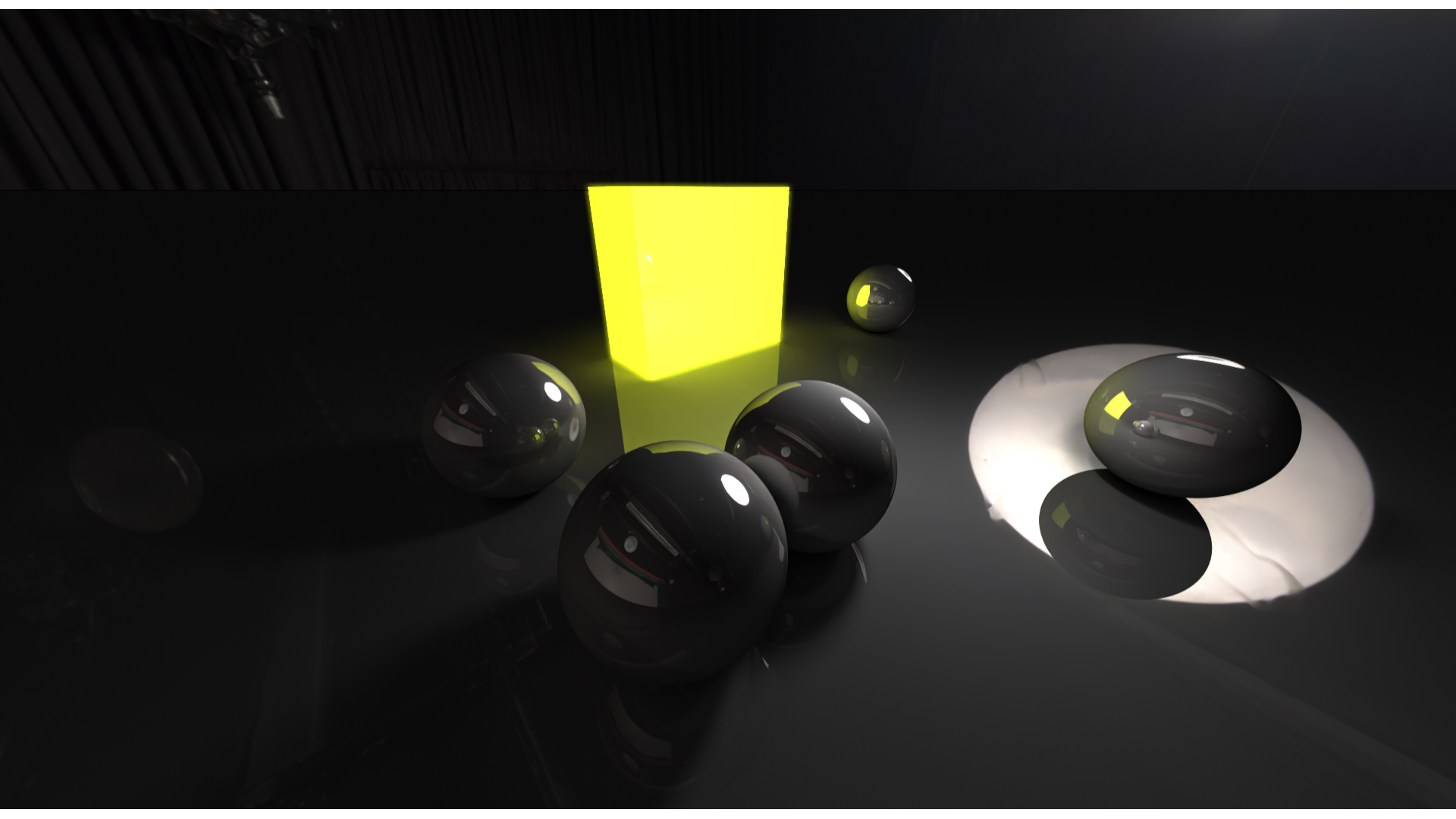
- Material system — multiple shading models, from Blinn-Phong through full PBR (metallic/roughness workflow)
- Lighting — directional, point, and spot lights; shadow mapping; environment mapping for image-based lighting
- Path tracing — progressive ray-traced ground truth rendered alongside the raster path
- Procedural generation — geometry generated at runtime rather than loaded
- Tooling layer — ImGui-driven controls for live parameter tweaking, plus CMake build tooling with clang-format and clang-tidy configured
Engineering Decisions
- C++ over higher-level bindings: direct control over memory layout, GPU uploads, and the render loop.
- ImGui for tooling: immediate-mode UI keeps experiment iteration fast without polluting the engine core.
- CMake + static analysis from day one: clang-format and clang-tidy enforce consistency across the codebase — engineering hygiene treated as part of the project, not an afterthought.
Result
A working real-time renderer that demonstrates the full journey from raw geometry to a shaded, lit, post-processed frame — with a path-traced reference mode for validating the raster output.
What I Learned
- The render loop is a contract: every subsystem either respects it or breaks it.
- PBR is less about the math and more about disciplined energy conservation everywhere.
- Debugging graphics means learning to read colors as data.